
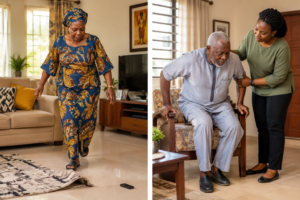
 A trip on the rug in the living room. A slight misstep on the stairs. A near fall in the kitchen. To you, they aren’t problems — it’s just part of growing old.
According to the Centers for Disease Control and Prevention (CDC), one in four older adults falls every year. The reasons include weak legs, poor balance, failing vision, medications and hazards in the home environment.
While it may be tempting to brush things aside and move on after a fall, you should take heed: it may be a warning sign of something more serious.
A near fall is a sign of a dent in your balance system. Your body merely managed to recover fast enough. The dent may lie in strength, coordination, reaction time, walking mechanisms and more. It is important to pay attention to near falls, because they can help you nip a more serious fall in the bud.
Understanding Balance Problems
You have a balance problem when your brain can’t accurately process signals from your eyes, ears and body. These parts work together as a system to determine the position of your body and how you should respond.
However, when any of them becomes weak or less reliable, maintaining balance becomes difficult. You feel dizzy and off-balance. This is why you trip and miss your steps — what you call “a near fall”.
In the end, just as a foundation carries a building, strong legs carry the body. They are the base of safe movement, fewer falls and independence.
Causes of Falls in Older Adults
1. Poor Balance
Balance relies on leg strength and skill. For example, you can stand on one leg, quickly regain your balance when you stumble, and stay steady while reaching for something. You are experiencing poor balance when you have to hold on to something — a wall, furniture, a chair — just to feel secure. These are warning signs of a fall.
The good news: regardless of your age, you can improve your balance. Strong legs are the base of good balance, but you need more than that. Restoring balance requires more than balance practice; you need a fall-prevention programme that covers strength, gait, balance and functional training.
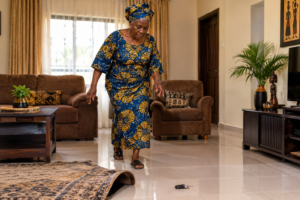 2. Leg Weakness
Falling is not just about losing balance. It is also about whether your legs are strong enough to carry you. If you trip, your legs must generate enough strength to guarantee your recovery. While standing, if you start to fall, your muscles must help reposition your body. And if you do fall, you need strength to get back up.
Common signs of leg weakness include difficulty lifting the feet, poor coordination, shuffling steps and a feeling of unsteadiness.
Strong legs are involved in virtually all everyday activities, such as:
- Standing up from a chair
- Climbing stairs
- Maintaining good posture
- Walking safely and recovering from a fall
3. Fear of Falling
Fear can trigger falls in older adults. According to a 2025 study of over 75,000 older adults, fear of falling raises the risk by over 60%.
Consequences of fear of falling:
- Shortened steps
- Reaching for furniture or something else to feel safe
- Moving less, or feeling reluctant to move
- Avoiding walks and visits
Here is how it works:
Fear of Falling → Less Movement → More Weakness → Greater Fall Risk
4. Inner Ear Disorders
Your inner ears have tiny fluid-filled tubes and small sensors that tell your brain when you’re moving, turning or tilting, and which way is down. A disorder of the vestibular system (the inner ear) can cause you to lose your balance, because it can no longer send accurate signals to the brain.
Consequently, you may feel:
- Dizzy when rolling over in bed
- Off balance
- A spinning sensation
5. Blood Pressure Changes
When standing up, some older adults experience orthostatic hypotension — a sudden drop in blood pressure. Symptoms include blurry vision, loss of balance and the feeling that you are about to faint.
6. Home and Environmental Hazards
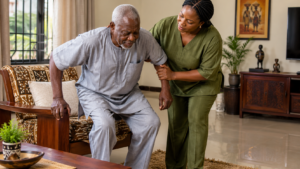
It is important to make the home safe for older adults: uncluttered walkways, good lighting and stable furniture. Furniture height matters a great deal. A good chair should allow you to sit with your knees slightly below your hips, which makes standing up easier. Chairs with sturdy armrests also let you push yourself up as you stand.
 7. Vision Changes
Vision helps the brain determine where the body is in space. Poor vision can impair judgement about where the floor, the stair or the step is. It can also make it difficult to spot uneven surfaces, see clearly in low light or maintain an upright posture.
8. Medications
Some medications can increase the risk of falling. These include blood pressure medications, diabetes medications, sleep pills, antidepressants and anti-anxiety medications.
They do so by causing:
- Dizziness
- Drowsiness
- Lightheadedness
- Confusion
Never stop a medication on your own. Speak to your doctor or pharmacist about a review.
How to Prevent Falling
- Work with a physiotherapist on a resistance training program that targets the trunk and legs.
- Stay active rather than avoiding movement.
- Move slowly when changing positions.
- Pause before walking.
- Add grab bars in your bathroom.
- Choose chair and bed heights that make standing up easier.
- Improve the lighting in your home.
Take the First Step
A fall is rarely just an accident; it is usually a warning. If a parent or loved one has had a near fall, shuffles when walking, or has started avoiding movement out of fear, do not wait for the next stumble.
At Physio-Plus Associates, our physiotherapists assess balance, leg strength, gait and home hazards, then build a program around the person, at home or through our partner hospitals. Independence is easier to protect than to recover.
Book a fall-risk assessment today by calling 08025777070, 07025150045
or visiting www.physioplusassociates.com
Take the first step now, before the next fall decides for you.