
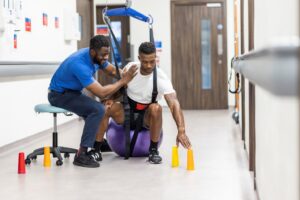
 More than one billion people live in Africa, and many are at high risk of having a stroke. Every year, about 150 to 316 people out of every 100,000 have a stroke. Africa also has very few brain doctors (called neurologists). For every 10 million people, there are only 3 brain doctors in Africa, compared to 900 in richer countries.
Stroke is a serious problem in Sub-Saharan Africa. It is the second leading cause of death and disability in the region. People between the ages of 30 and 60 are affected the most. These are often the years when people are working, raising families, and helping their communities. Because of this, stroke can cause great emotional and financial problems for families and communities.
When someone has a stroke, every moment matters. The medical team will hurry to find out the cause of the stroke and work to prevent further damage to the brain. The rehab team must start immediately the doctors confirm that you are medically stable. This is usually within 24 to 48 hours. The first 90 days after a stroke are especially important to get your strength and movement back. During this time, the brain can begin to repair itself and learn new ways to work. This ability is called neuroplasticity – almost like a computer that has suddenly stopped working and is trying to restart and get back to normal.
What is neuroplasticity?
Neuroplasticity is the brain’s ability to change and adapt. This can either be a change in function due to damage to the brain, or a change in the brain’s makeup as it adjusts to a new experience.
Neuroplasticity is formed from two words — neuro and plasticity. Neuro, or neurons, are the nerve cells that make up the brain and nervous system. Plasticity refers to the brain’s flexibility — its ability to change.
How does neuroplasticity work?
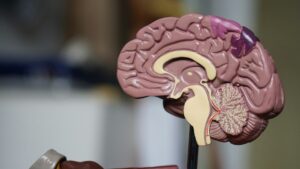
- The brain’s nerves, or neurons, form new synapses (tiny gaps or connections between two nerve cells)
- These synapses, or neuron connections, are strengthened
- The branch-like extensions of neurons grow new connections, extending to the nearest brain cells
- New neurons form
- Unwanted neurons are trimmed while effective ones are reinforced
How the Brain Recovers After a Stroke
Right after a stroke, the brain begins to heal and make changes through the process of neuroplasticity. The brain starts by making changes in the areas closest to where the stroke caused damage. The other side of the brain can also help with recovery. However, depending too much on the other side may sometimes slow down the recovery process.
Within a few days, moving and exercising the arms and legs can help the brain create new connections. These movements send signals to the brain and encourage healthy brain cells to help with important tasks. This process can continue for one to two weeks and may continue for even longer.
Physiotherapy and other rehabilitation activities can help the brain during this natural healing process. When the brain’s natural ability to change is combined with guided physiotherapy and regular practice, a person may have a better chance of regaining movement and other abilities after a stroke.
Critical recovery window
Studies show the first 90 days remain the most significant window for recovery. Imaging studies show that neuroplastic changes begin almost immediately after a stroke, become pronounced within two weeks, and peak around 30 days — coinciding with the period of best recovery in stroke patients. Research from Johns Hopkins shows that the chances of recovery may be forfeited if treatment is delayed by even seven days.
Physiotherapy treatment should therefore begin immediately, leveraging the critical recovery window while the brain is most receptive to neuroplastic change.
- The Emergency or Acute Stage (1-7 days)
Medical professionals intervene at this stage to stabilize the patient, determine the type of stroke, and prevent complications. Physiotherapy should begin immediately after medical intervention — rehabilitation may start as early as 24 hours post-stroke if the patient is stable.
Studies show that immediate intervention cuts mortality rates, shortens hospital stays, and reduces partial or total disability. Patients with ischemic stroke typically leave the hospital 4-7 days after admission.
2. Early Rehabilitation (Weeks 2-4)
The following rehabilitative activities begin once the patient has been discharged from the hospital:
- Physiotherapy — facilitates movement and strengthens muscles
- Occupational therapy — helps the patient with daily activities such as bathing, dressing, and eating
- Speech therapy — helps the patient communicate, and improves speech clarity and swallowing ability
3. Building Strength and Improving Patient Independence (5-12 weeks)
The aim here is to increase the patient’s independence so they can once again do the things they used to do before the stroke.
Goals:
- Help the patient regain mobility and coordination
- Motivate the patient to perform daily activities independently
- Help rebuild memory and speech
4. Advanced Recovery and Adaptation
- Fine motor skills
After a stroke, you may be unable to button your shirt, hold a pen, or eat with a spoon — these activities demand a lot of coordination between the brain and small muscles. A physiotherapist helps you relearn them, from zipping up a bag to texting on a phone.
- Balance and coordination
Stroke often disrupts your body’s equilibrium — its ability to stay upright and move smoothly, whether standing, walking, or reaching for something without losing balance. This happens because stroke can affect the brain’s control of movement and spatial awareness, making falls a major risk during recovery. Physiotherapists work closely with patients, caregivers, and family members to help prevent them.
- Emotional and psychological recovery
Stroke can be debilitating and life-altering, leaving survivors with fear, frustration, grief, anxiety, or depression. This part of recovery helps them rebuild confidence, process the emotional weight, and adjust to a “new normal” — with support from family, counseling, or support groups.
Components of a Successful Recovery Roadmap
- Early rehabilitation — Starting treatment early drives improved rehabilitation outcomes.
- Repeat and Rebuild — Practising daily helps the brain rebuild its functions.
- Multidisciplinary care
- Physiotherapist
- Neurologist
- Speech therapist
- Psychologist
- Lifestyle adjustment
- Diet
- Regular exercise
- Monitoring and managing blood pressure
Common Challenges During Recovery
- Weakness or paralysis — one side of the patient’s body loses strength or becomes paralysed
- Balance and coordination — standing, walking, or sitting may become difficult
- Swallowing problems — eating and drinking can become a major challenge
- Bladder and bowel control — patients might lose the ability to control themselves
- Memory and focus — patients may struggle to remember things or solve problems
- Post-stroke depression — patients often feel sad, hopeless, or depressed
- Frustration and anxiety — a common response to the loss of independence
Conclusion
Stroke is never a welcome guest. Whenever it visits, it throws the sufferer and loved ones into cycles of fear, anxiety, and panic. This is hardly surprising, given that stroke ranks second for death and disability in Sub-Saharan Africa — where 10 million people are mapped onto just three neurologists, compared to 900 per 10 million in high-income countries. Every moment matters after a stroke. Early treatment improves rehabilitation outcomes, especially within the first 90 days — the critical recovery window when the brain is most open to neuroplastic change.